Slovenian
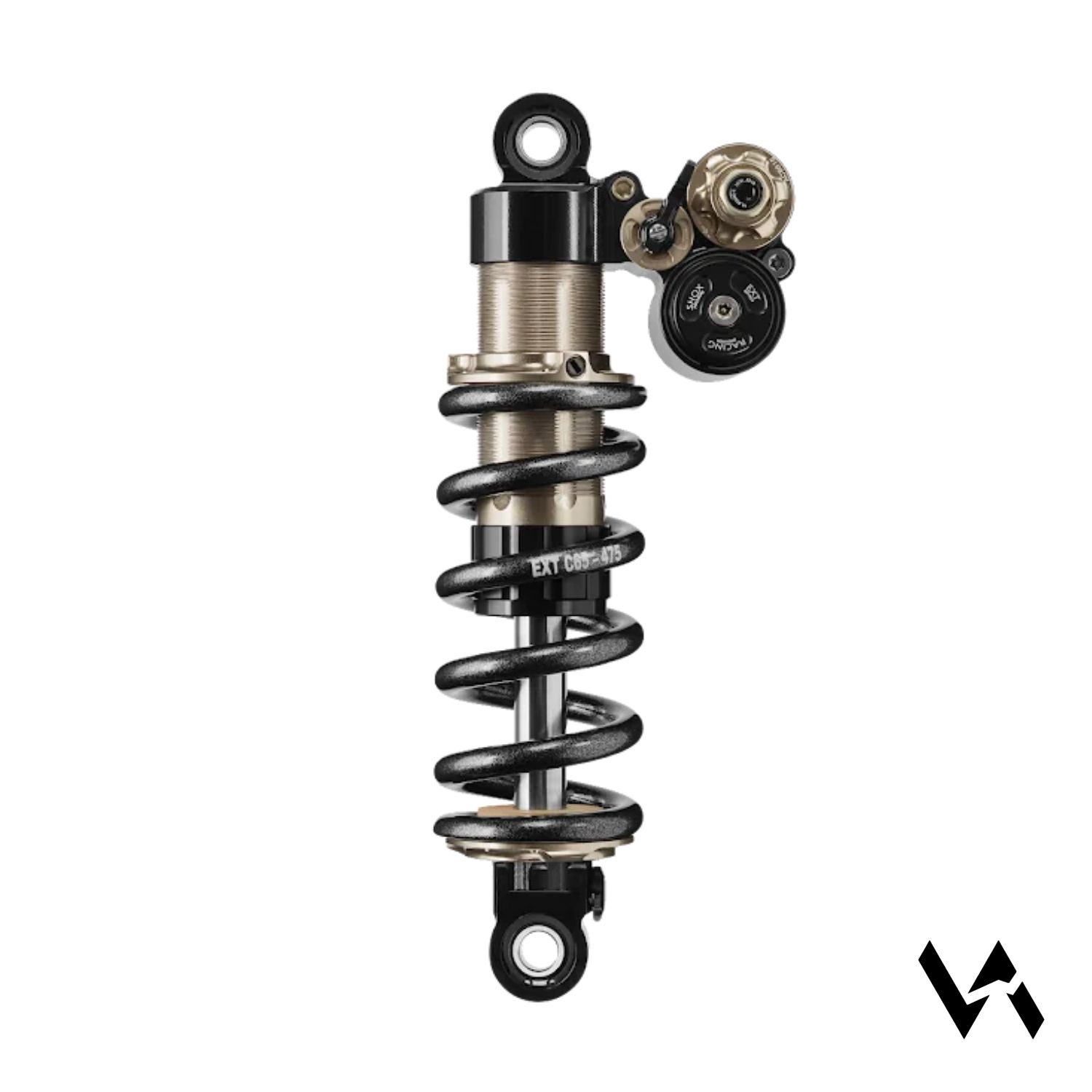
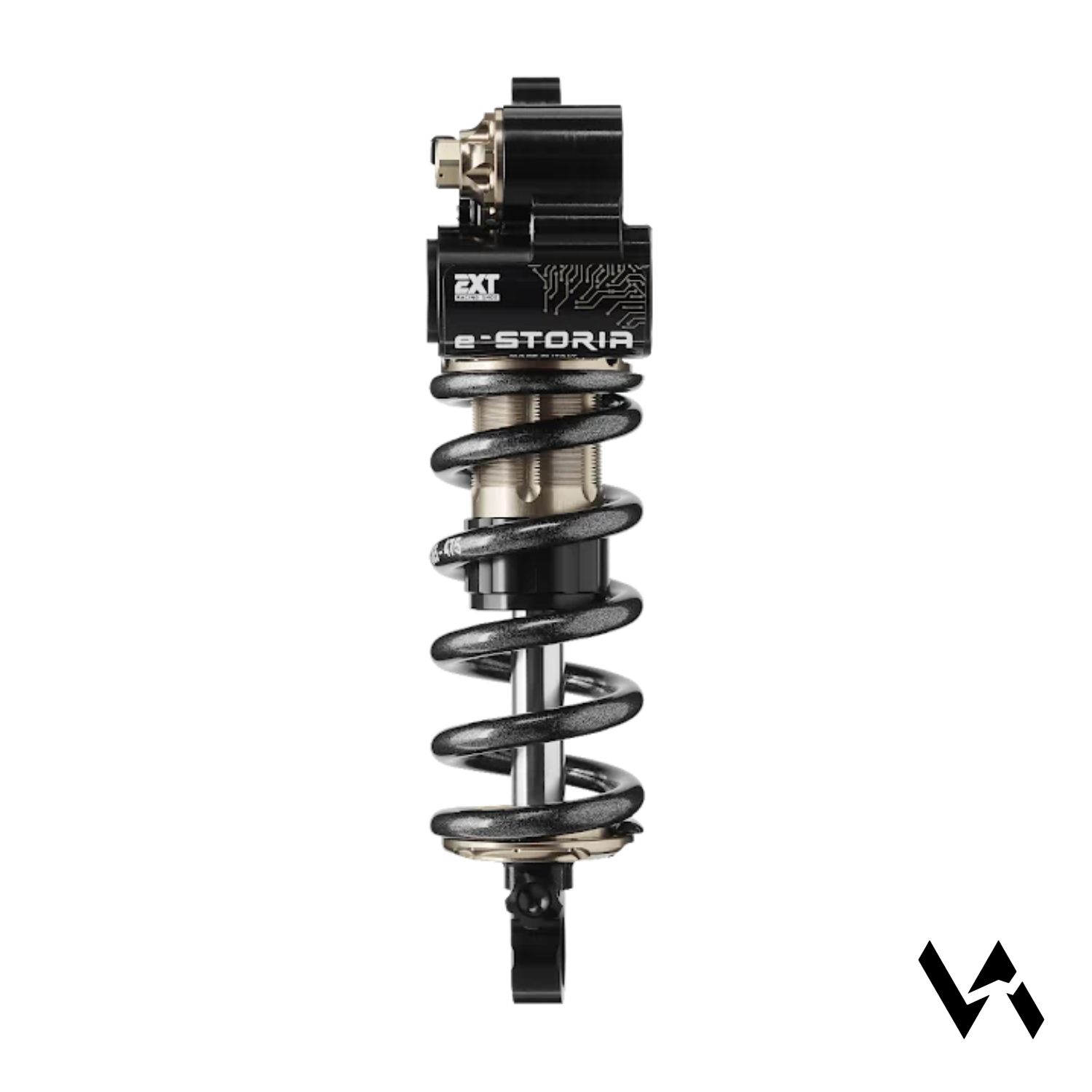
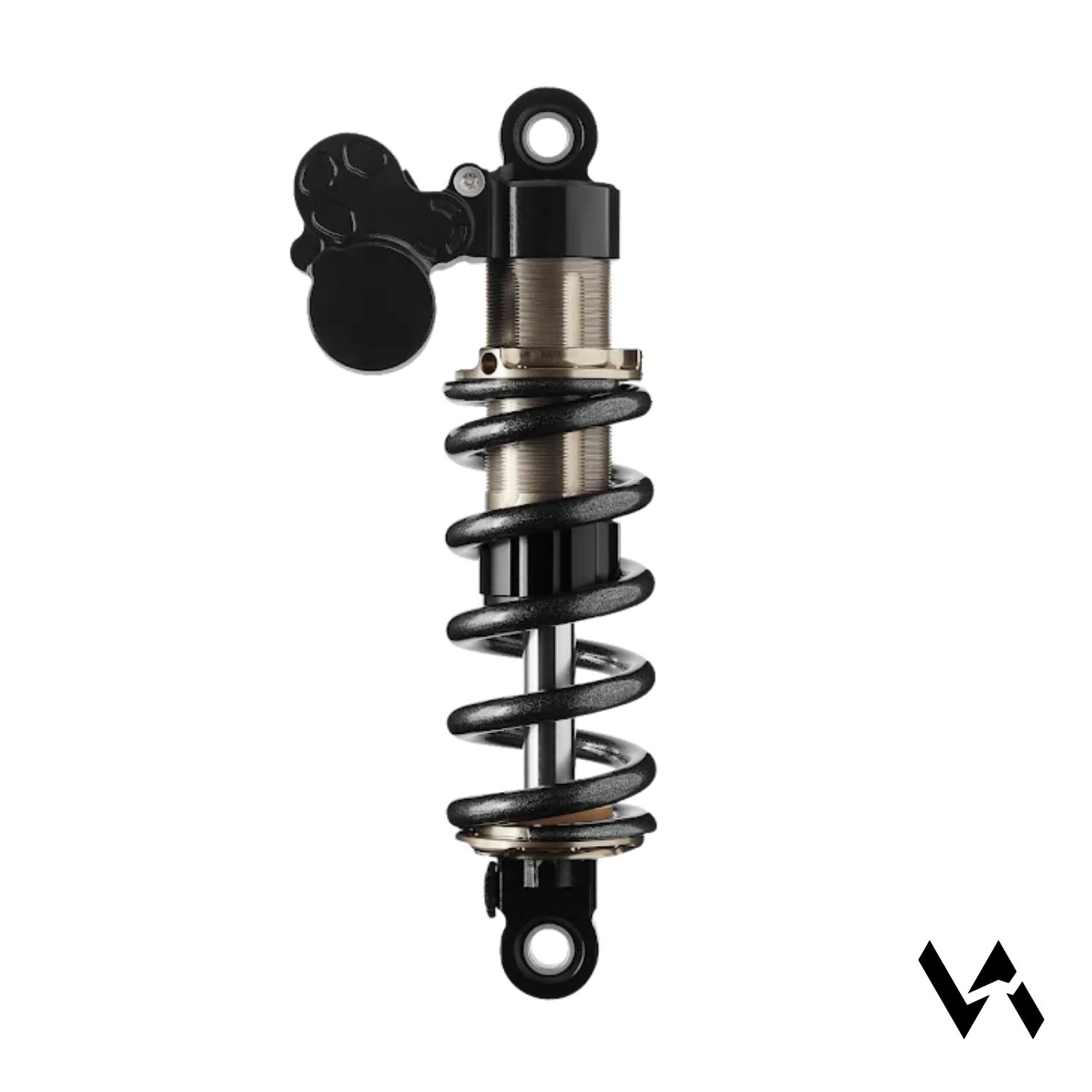
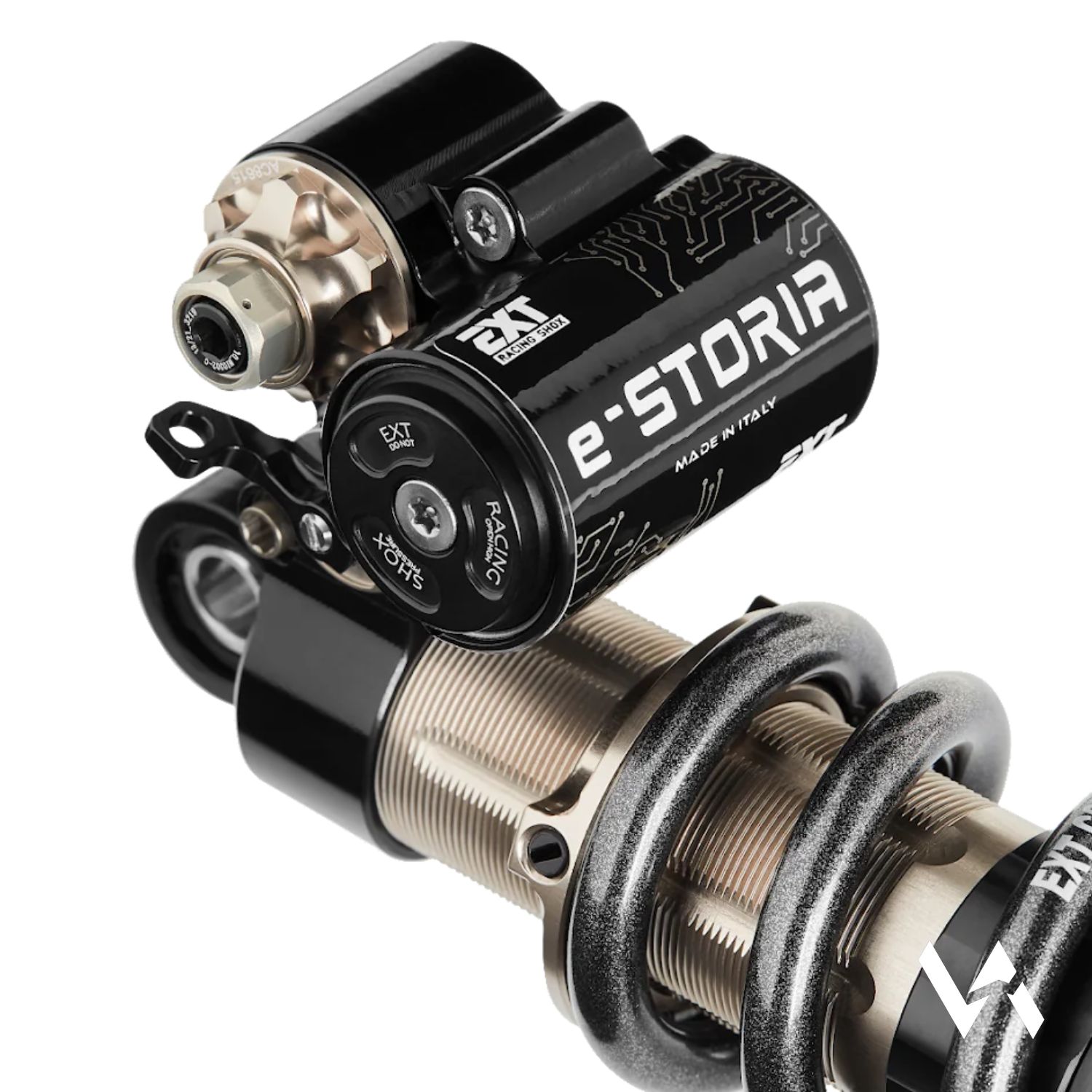
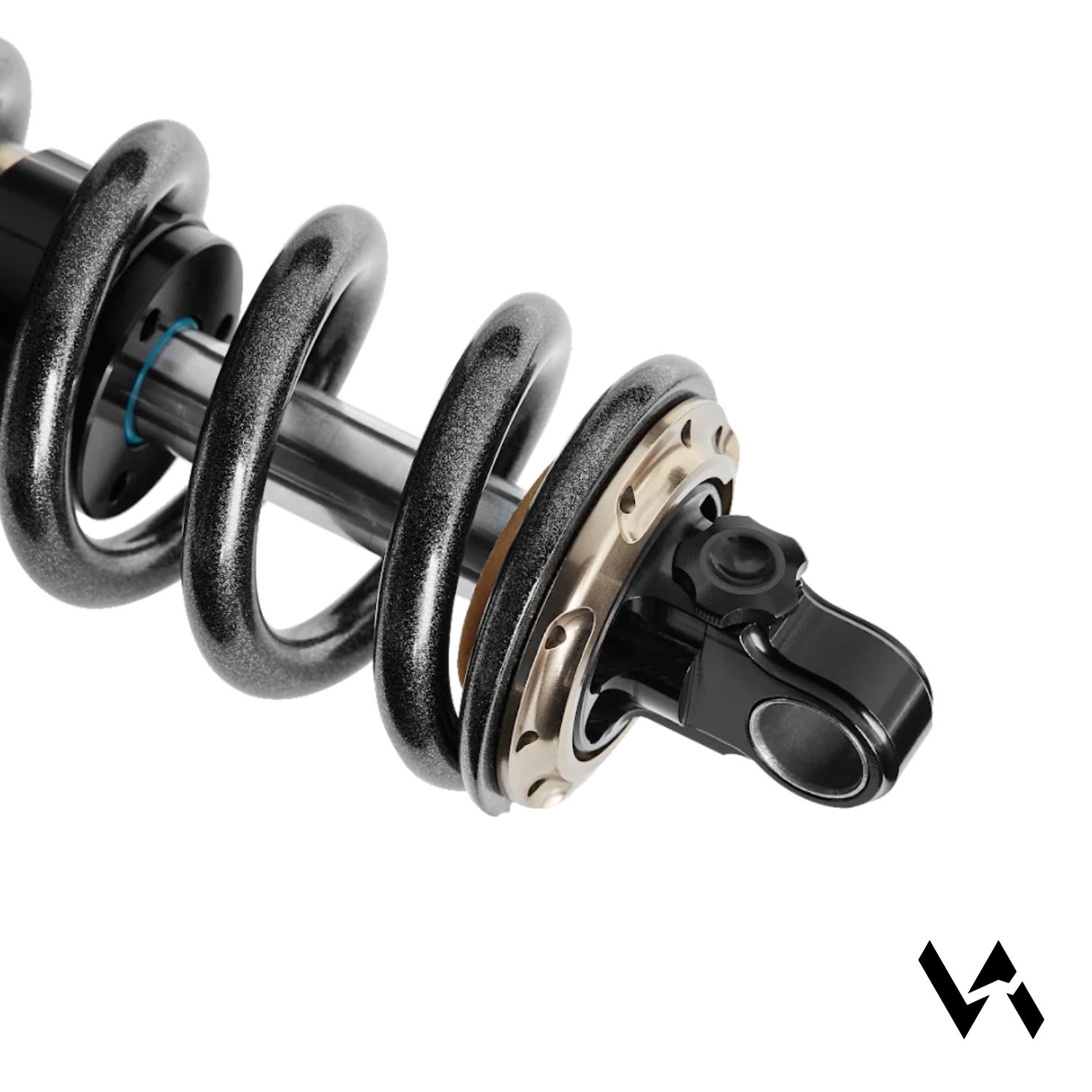
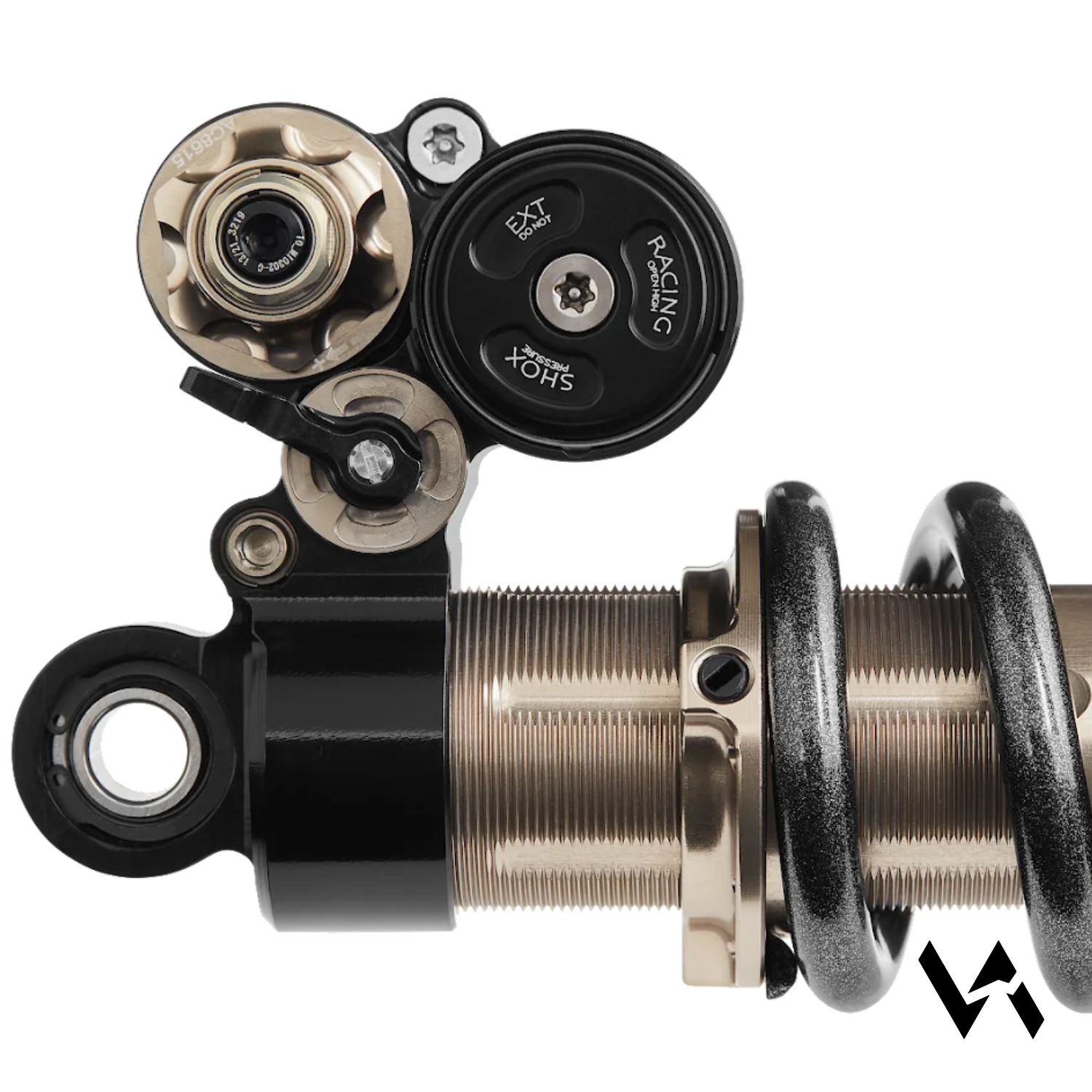
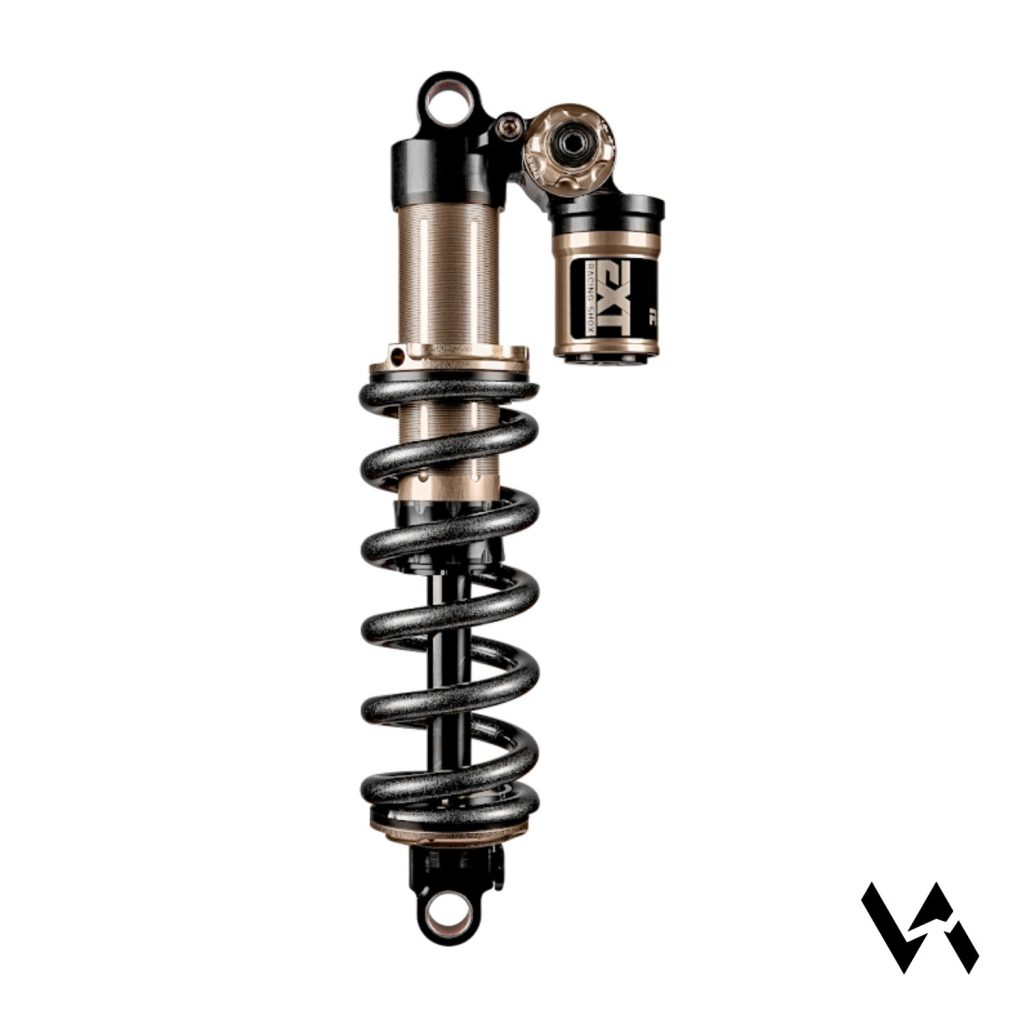
EXT E-STORIA is a coil rear shock specifically developed for electric mountain bikes. It is based on the STORIA V3 model, with its construction, materials, and hydraulic system adapted to the increased weight and loads associated with modern E-MTB bikes.
The shock allows independent adjustment of compression and rebound damping and includes hydraulic bottom-out protection. It is primarily intended for demanding enduro and gravity riding, where consistent suspension performance and the ability to fine-tune settings are important.
HBC – Hydraulic Bottom-out Control
The HBC system provides additional hydraulic support in the final 15% of the shock’s travel. As compression increases, it progressively increases resistance, reducing the risk of bottoming out during larger impacts or landings.
The level of intervention can be adjusted independently of the other compression damping settings.
LOK 2.0 – Hydraulic Support During Pedaling
LOK 2.0 is an independent hydraulic system that provides increased compression support during pedaling. Since it operates separately from the main hydraulic circuit, its use does not affect the shock’s basic settings.
Damping Adjustments
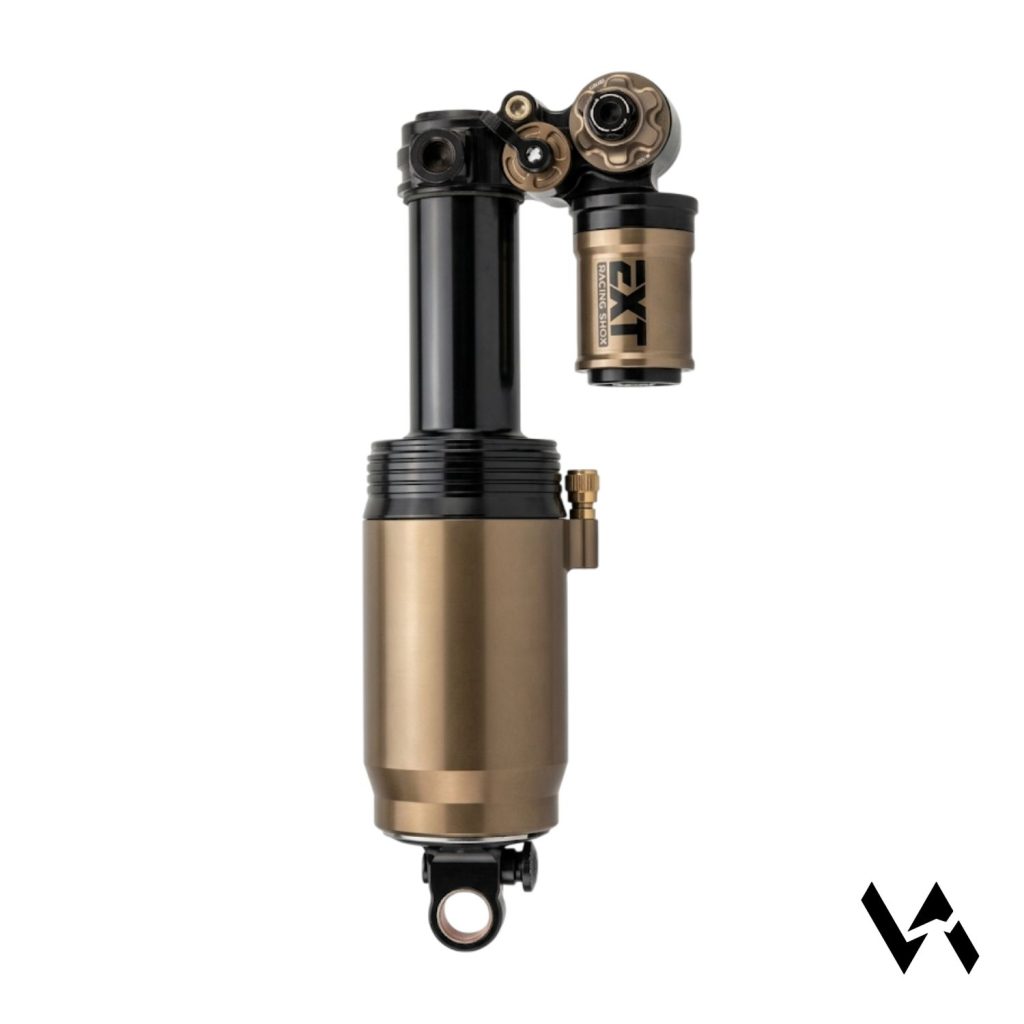
E-STORIA offers four external adjustments:
- LSC (Low-Speed Compression): low-speed compression damping.
- HSC (High-Speed Compression): high-speed compression damping.
- LSR (Low-Speed Rebound): low-speed rebound damping.
- LOK: additional hydraulic support during pedaling.
The independent adjustments allow performance to be adapted to the suspension design, rider weight, terrain, and riding style.
Construction and Materials
E-STORIA features a reinforced body and a chrome-molybdenum shaft with a low-friction coating. The hydraulic system includes a low-pressure chamber operating at 55 psi, which, together with low-friction seals, provides sensitive performance during small suspension movements.
The shock is available in various sizes and with Standard or Trunnion mounting options.
Important: Before ordering, it is necessary to check the correct shock dimensions, mounting type, and compatibility with the frame. The spring is selected according to the rider’s weight and suspension characteristics and must be ordered separately.